In 1969 I was bought my first bird book - The Observer's Book of Birds. Whilst I never of course questioned the accuracy of the text as a mere seven year old, I did marvel at why I didn't see hawfinch in my garden as the book described them as being rare but widely distributed, especially in gardens.
Of all the species described in the book, only one had eluded me from being seen in Great Britain - until this weekend when Kentish Plover could after forty one years, be ticked. This has led me to smile at some of the changes over these past forty years using my 1969 edition as reference.
Chough are said to exist in the extreme south west of England and thankfully that is again true.
Lesser Redpoll was then more abundant in the north rather than non-existant in the south as is now the case !
Cirl Bunting were present in southern Britain but nowhere as common as Yellowhammers. I lived in the south but could never find one but I did scrutinise every Yellowhammer just in case.
Tree Sparrows avoid the dwellings of man which is undoubtedly why I never saw them in trees around my house despite much looking as a young boy.
Meadow Pipits are also known as Titlarks. Are they ?
Willow Tits were exactly like Marsh Tits or almost so by all account. This scared me as to how I would know if I found one as a boy and if I'm honest, still does now.
Marsh Warbler gets a full page and b&w plate whilst Cetti's Warbler fails to get a mention. just as well I didn't see one then.
Yellow-browed, Barred or Icterine Warblers didn't exist in those days but Ortolan Bunting could be seen migrating, cheifly at the coast.
Red-backed Shrike happily bred as a summer visitor although I never knew where despite going fishing at the blue and green lagoons in Arlesey which I think was their last breeding site in Beds. A candidate for reintroduction I reckon.
Wrynecks were mostly seen in the south east of England in summer rather than on the east coast in autumn.
Red Kites were only found in parts of Wales and White-tailed Eagle was only a rare visitor to our east coast.
Osprey was a scarce migrant usually to the east coast.
Marsh Harrier - the rarest of the three harrier species found in Britain. Now they are widespread and by far the most common of the three.
Goshawks weren't invented and were probably misidentified as Sparrowhawks (!)
Spoonbills were mere migrants and Cranes and Little Egrets were unknown.
Avocets were considered mainly as migrants and winter visitors rather than breeding despite re-establishment in 1946.
Spotted Redshanks were uncommon migrants and Temminck's Stints didn't get a mention.
Little Ringed Plover were now breeding in gravel-pits in the home counties. I lived in the home counties but I never knew where to look.
No mention in 1969 of Corncrakes being restricted to the Scottish extremities.
Collared Dove barely gets a mention whilst Turtle Dove is afforded a full colour plate but best of all and most poignant, the Kentish Plover then nested in a small area of the south coast and on Sunday could only be found at Eyebrook reservoir and a couple of other coastal sites I can't remember.
I wonder what the next forty years will bring ?


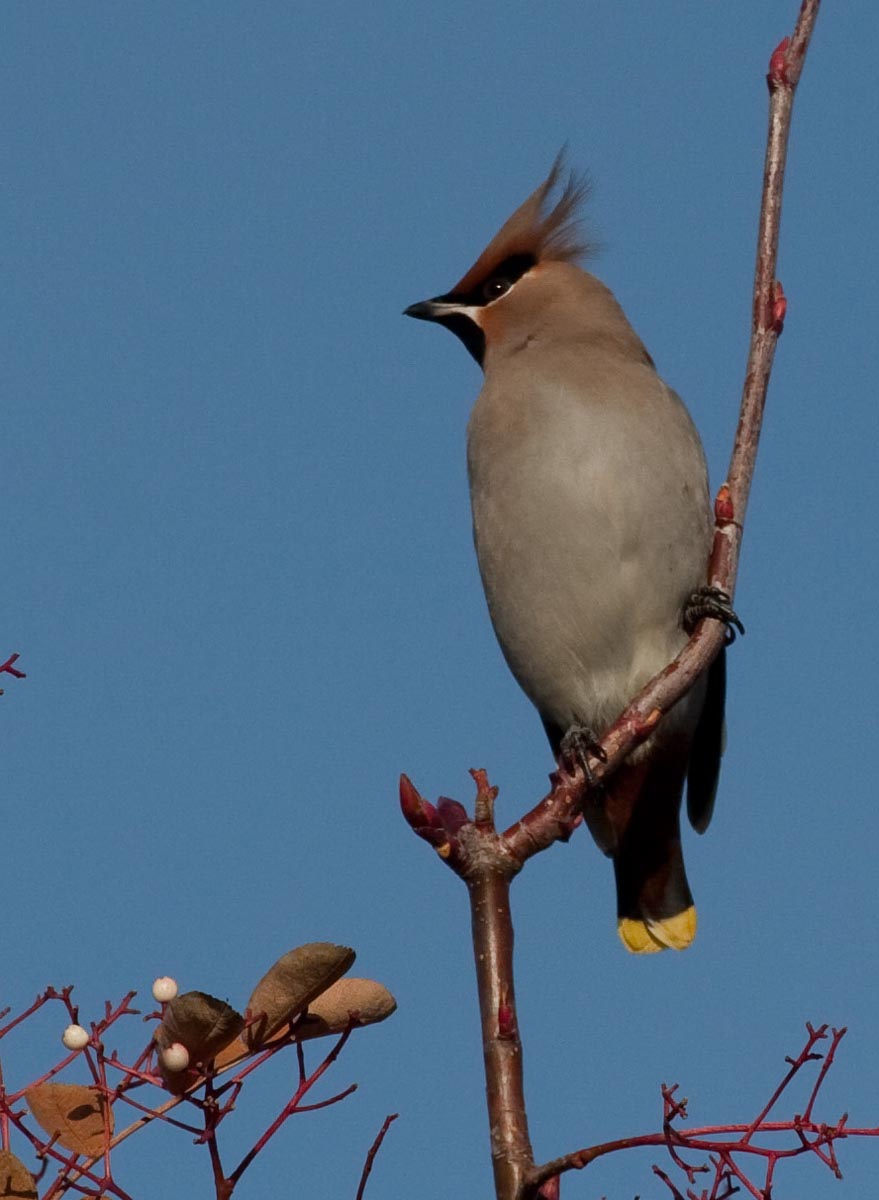 A rare venture out of late to Woburn where eighteen Waxwing were posing along Leighton Street. Superb birds aren't they ?
 Marsh Wren
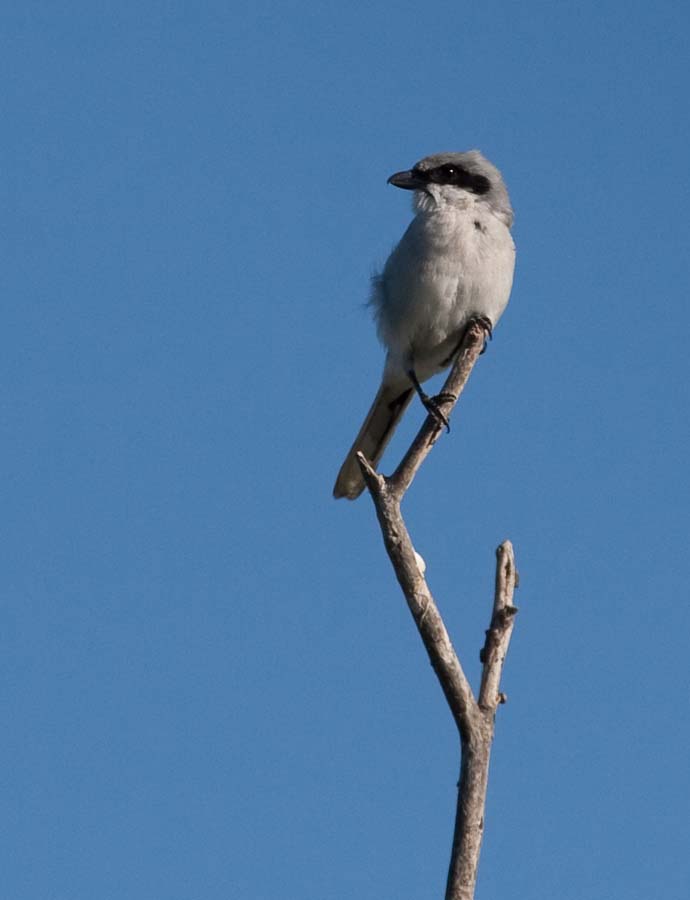 Loggerhead Shrike
 Yellow-bellied Sapsucker
 White-faced Ibis
 Lincoln's Sparrow
 Field Sparrow
 White-crowned Sparrows
 Eastern Meadowlark
 Chipping Sparrow
 American Wigeon

 Back to working in Texas, this time with my DSLR. The Great-tailed Grackles congregate in the evenings in their hundreds and thousands around the car lots and restaurant areas resembling a scene from Hitchcock's "The Birds". Evening light and the birds queueing to bath made for some photo opportunities.
  A chance picture through the kitchen window yesterday afternoon. The IS seemed to cope well with a hand-held shot at only 1/30th second. I couldn't get a shot of the bright male Brambling that was also around.

 A good freind has lent me an old leather bound copy of " An Illustrated Manual of British Birds" by Howard Saunders (1889) and it makes interesting reading. In those days Leica and Swarovski must have served the avid birder with firearms rather than optics !
 Plenty of continental thrushes feeding this morning in the village including a female Ring Ouzel amongst the Redwing. A male Siskin and this Jay were nice to watch too.
 Lovely light this morning. A kettle of six vocal Common Buzzards just north of the river and plenty of Long-tailed Tit family feeding parties.
 Birding this year has been poor for me as I've not been able to get out as much as I'd have liked. The weekend was looking "busy" but if this little blighter at Holme NWT stuck around long enough I might be able to squeeze in a lightening visit. Arctic Warbler as a mainland bird that hangs around is a rare event so shameful as the dash&tick might be, I ought to give it a go.
 In 1969 I was bought my first bird book - The Observer's Book of Birds. Whilst I never of course questioned the accuracy of the text as a mere seven year old, I did marvel at why I didn't see hawfinch in my garden as the book described them as being rare but widely distributed, especially in gardens.
 Despite thoroughly cleaning my feeding area with strong disinfectant, I've seen Greenfinch and Chaffinch in recent weeks dying from this awful disease. Details can be found on the following RSPB web pages with instructions of what to do. http://www.rspb.org.uk/advice/helpingbirds/health/sickbirds/greenfinches.aspx
 A revisit to the RBS at Biggleswade STW, this time with scope and camera. This time the birders were gathered in the regular feeding corner the bird had frequented on Friday so I guess the bird was further away along the railway line and not wanting to return to where it seems to favour. I'm sure it will come back and will give better views though.
 A species I've not tried to see in the UK before now but this one at Eyebrook seemed settled and was relatively close to home. The bird seems to have an injured left eye.

 Lot's of mewing from the young birds which have fledged this summer north of the river with adults seen bringing remains of rabbits.
  Having seen more of the Kingfishers on the river in the past few days I decided to take a boat out this morning to try and pin them down. I saw three, possibly four birds, undoubtedly a family group which I'm pleased have bred but I need to put much more work in to get any half-decent photographs.

 These Reed Warblers were still feeding young. Each time one of the adults flew into the reed clump, the high pitched sounds from the young could be heard - I assume still in the nest which seems very late in the season ?
 It's a while since I tried photgraphing butterflies and the Silver-spotted Skipper has been one I have omitted to try for in the UK. Until today that is at Aston Rowant NR where the sun bought this one out close to the car park. My first day out in ages.
  Having lost the regular pair of Little Owls in the south of the village following the cold winter, I'm now enjoying watching a pair closer to home. There are two birds but I'm not sure they bred ?
 Still not getting much further than the garden but there's plenty to try and photograph. Need to get a proper macro lens though.